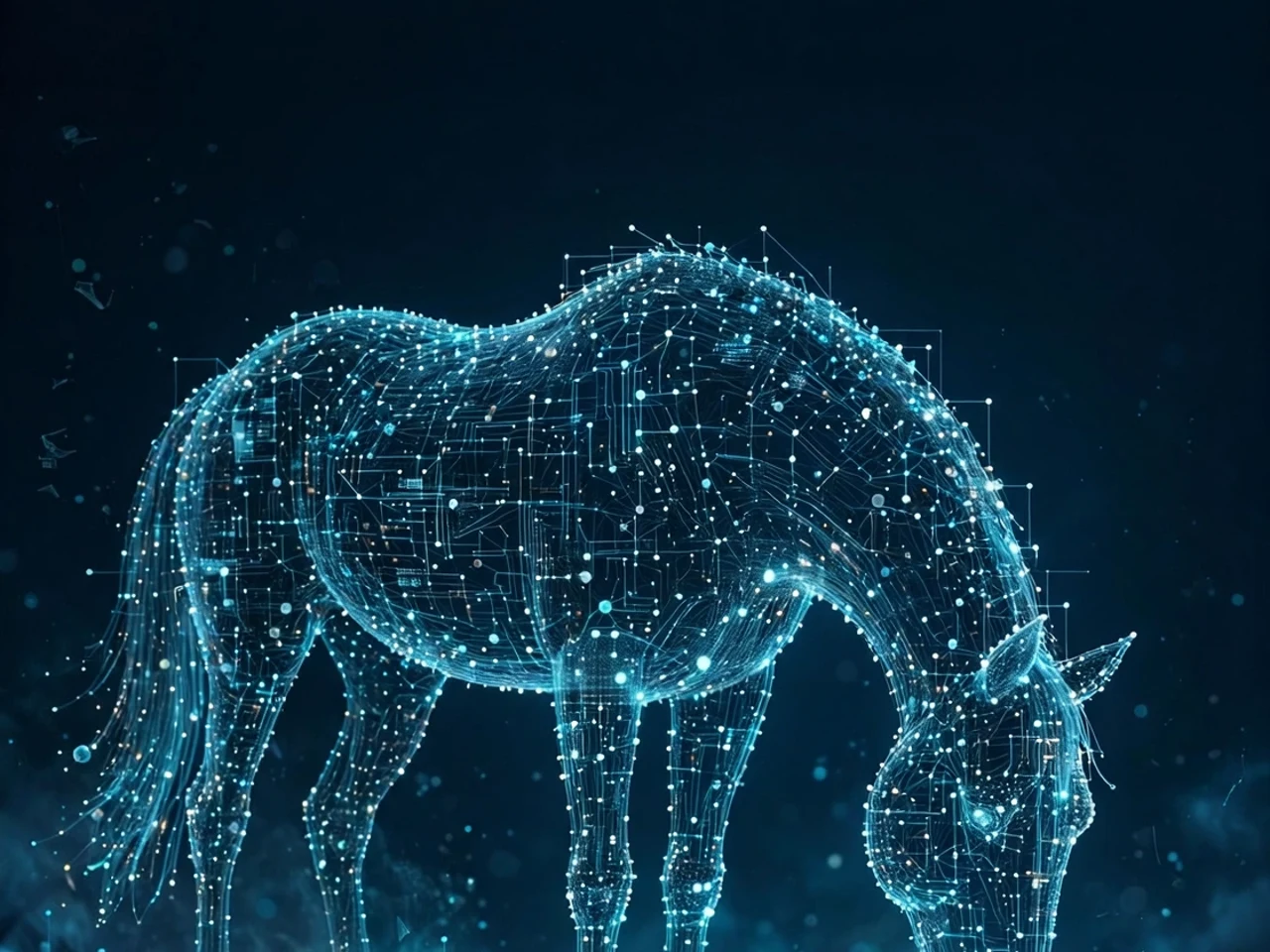
You Can Lead a Horse to Water
Foundation Document — working file, not manuscript
Author: Louis G. Henschel Conceived: October 17, 2026, by dictation Status: Foundation only — premise, structure, verified genealogy, chapter outline, open decisions. No chapters drafted yet. Audience: The 50-year-old man on the couch. Plain language throughout. If a sentence needs a glossary, it gets rewritten.
1. Title Record
Title: You Can Lead a Horse to Water
The dropped half is the strategy. Everybody alive already knows how the proverb ends: …but you can't make him drink. Louis's ruling is that the book never prints the second half — not on the cover, not in the title, not as a subtitle. The reader's own head supplies it, from common knowledge and tribal knowledge, the way a song you grew up with finishes itself. That does three jobs:
- It makes the reader a participant. He didn't get told the thesis; he completed it. The argument starts in his head before page one.
- It names the subject without accusing anybody. The book is about refusal. A title that ends mid-sentence points at the refusal without calling any man a fool.
- It is honest advertising. The book leads the reader to a pond of evidence. Whether he drinks is, in the end, exactly the subject.
Working subtitle (internal only, not for the cover): The refusal, the business, and the question of who built the pond.
Catalog note: This is its own work — a nonfiction argument book. It is distinct from Muse-ical Chairs (the collaboration-system book) and from the earlier writings. The two books are cousins: that one is about the man who drank and what happened next; this one is about everybody standing around the pond.
2. The Premise — in Louis's terms
There is more useful information sitting in front of the average person right now than any king in history ever had, and a machine that will explain any of it, patiently, at 2 a.m., for free or nearly. And huge numbers of people — whole generations — will not touch it. Not because it failed them. Because of stubbornness. Because of fear. Because their politics told them the water is poisoned, or their pride told them needing it is weakness, or their age told them the pond is not for them.
At the same time, behind that pond, a business got built — fast, and in a shape nobody voted on. A handful of companies each took a segment of artificial intelligence and stayed in it: one makes the chips, a few make the models, a few own the pipes the models run through, one gives the models away, one hides them inside phones. The companies grew out of each other. The people move between them like they all work for the same company and just change buildings. The same investors' names are on everybody's paperwork.
So the book asks two questions and welds them together:
- Why won't the horse drink? (The refusal.)
- Who built the pond — and did somebody draw the map? (The business, and the orchestrator question.)
If the lanes were dealt — if there is a master architect handing each company its segment — then the refusal isn't just sad, it's the last move of somebody else's plan. And if there were no dealer, if the lanes just happened, then the refusal is purely our own doing, which might be the harder sentence to sit with. Either way the horse is standing there, thirsty, in front of the fullest pond that has ever existed. That is the book.
3. The Central Image — and how it carries the book
One image, three levels of water. The horse at the pond is not just the title; it is the book's engine. Every part maps onto it:
- The pond is the information itself. Not a river — a pond. Still, accumulated, sitting there. AI doesn't flow past a man who ignores it; it waits. The pond gets deeper every month whether he drinks or not. That stillness matters: nobody can say the water got away from them.
- The pond has a water table, and the water table is the business. Under the surface the reader sees, there is a structure he doesn't: chips below models, models below clouds, clouds below distribution, money and people circulating through all of it like groundwater. Part Two of the book is a tour of the water table.
- The lead rope is everything that brings a man to the edge: his kids showing him a phone, his job handing him a login, a friend saying you have to see this. The book is itself a lead rope — which is why the title works as a mission statement, not just a joke.
- The horse is never mocked. This is a discipline for the writing: the horse has reasons. Pride is a reason. Being lied to by experts for thirty years is a reason. Watching every new thing get weaponized for politics is a reason. The book loses its reader the first time it laughs at him. The man on the couch must feel understood by page ten and challenged by page fifty — in that order.
- The refusal has a cost curve. A pond ignored doesn't stay the same size. The men who drank early are now building with it; the gap compounds like interest. The book's urgency comes from arithmetic, not hype.
Scene to open on (prologue beat, flagged as a scene to write, not a fact claim): a man — any man the reader knows — sitting in a kitchen or a truck or a break room, phone face-down, saying some version of "I don't mess with that stuff," while the most patient teacher in human history sits in his pocket, unopened.
4. The Three Threads
Thread One — THE REFUSAL
Why generations won't drink. The characters, in Louis's framing, are stubbornness, generational fear, and politics — treat them almost as people in the story.
- Stubbornness is identity wearing work boots: I built my life without it. Needing it now means the life was done wrong. For a man near the end of his run, that is not a small ask, and the book must say so plainly.
- Generational fear is not fear of the machine; it's fear of looking foolish in front of it — of being the old dog in the room. Plus a rational layer: this generation watched technology promise and betray in cycles (outsourcing software, social media, the phone eating the grandkids). Distrust was learned, and some of it was earned.
- Politics turned drinking into treason. When a tool becomes a tribal marker, refusing it is loyalty and using it is defection. Both tribes did this, in opposite directions — one side's water is poison, the other side's refusal is ignorance, and the man in the middle stops drinking anything to keep the peace.
Thread Two — THE BUSINESS OF AI
How the industry actually grew: not a hundred companies racing in the open, but a family tree. One research lineage (a single 2017 paper out of Google sits under nearly everything), a few founding splits (OpenAI → Anthropic is the big one), a wave of platform money (Microsoft, Amazon, Google buying into the labs), a playbook of acquisitions-that-aren't-called-acquisitions, and underneath it all a three-deep hardware stack (one lithography maker → one dominant foundry → one dominant chip designer) that every single lab, however rebellious, must drink from. The genealogy in §6 is the spine; it was verified fact-by-fact for this foundation (see §8).
Thread Three — THE ORCHESTRATOR QUESTION
Louis's thesis-question, stated fairly: if every company runs its own segment and stays in its lane, is there a master architect who dealt the lanes? The book treats this as an open investigation, not a verdict in search of decorations. §7 lays out the evidence for, the evidence against, and the three possible endings Louis can choose from. The discipline: every claim in Part Three gets labeled documented, inferred, or speculation — in the text, in plain sight. A book that labels its own certainty can ask dangerous questions and keep the reader's trust. A book that doesn't becomes a pamphlet.
5. Chapter Outline
Prologue, thirteen chapters, epilogue. Working titles; Louis renames freely. Each brief is one paragraph, written for the couch, not the seminar.
Prologue — The Horse at the Pond
The image, stated once and simply: the fullest pond in human history, and a generation standing at the edge of it with its arms crossed. Introduce the two questions (why won't he drink / who built the pond), the promise of the book (evidence, labeled honestly), and the man this book is for. End on the proverb's missing half — the only place the book ever comes close to printing it — by not printing it.
PART ONE — THE REFUSAL
Chapter 1 — The Generation That Built the Pond The irony at the center of the refusal: the men and women now refusing AI are the ones who wired the world. They put a computer on every desk, a phone in every pocket, a network in every wall. This chapter honors that before it argues with it — the refusal is not stupidity, and any book that treats it that way deserves to be put down. Sets up the generational map: who adopted early, who is curious-but-quiet, who has made refusal a personality.
Chapter 2 — Stubborn Is a Strategy Stubbornness as a survival tool that worked for fifty years: the man who didn't jump at every new thing kept his money and his dignity while fads died around him. Then the turn: this time the new thing is not a fad, it's a teacher — and the strategy that protected him starts charging him rent. Includes the pride mechanism in plain terms: drinking now can feel like admitting the last thirty years were done the hard way on purpose.
Chapter 3 — Fear, Dressed as Wisdom The fears, one at a time, taken seriously: fear of being fooled (deepfakes, scams aimed at his exact age), fear of being recorded and judged, fear of the job math, fear of dependence — if I lean on it, what happens to me when it's gone or turns? Separates the fears that are information (some are) from the fears that are habit. The chapter's rule: never tell a man his fear is stupid; show him which fears the pond itself can answer, because the fastest way to check whether the water is poisoned is to ask the water hard questions — and watch it work.
Chapter 4 — The Politics of the Pond How AI became a jersey. One tribe sells it as the end of honest work; the other sells refusal as proof of ignorance; both sell identity, and a man who just wants to fix his truck or run his shop gets handed a uniform instead of a tool. The chapter names the machinery: outrage pays, nuance doesn't, and a technology with no natural party got assigned two. Ends on the cost: while the tribes argue over the pond, the pond's owners keep digging it deeper — politics as the most effective fence ever built, and it was built by the drinkers' opponents and the owners alike, for opposite reasons.
PART TWO — THE BUSINESS
Chapter 5 — The Spring: One Paper 2017, inside Google, eight researchers publish a paper with a Beatles joke for a title — "Attention Is All You Need" — and hand the world the Transformer, the architecture under ChatGPT, Claude, Gemini, Llama, Grok, all of it. Google published it openly, science-style, the way you'd publish weather research. Then all eight authors left. This chapter tells the scatter (§6.2): one co-founded Cohere, one Character.AI, two Adept and then Essential AI, one Sakana in Tokyo, one an RNA company, one a blockchain, one went to OpenAI. One spring, eight streams. The book's central business fact: nearly everything in the pond flows from this one source — and the source gave it away.
Chapter 6 — The Bottom of the Pond: Three Companies Under Everything Before the famous names: the stack nobody sees. ASML (Netherlands, 1984) is the only company on Earth that builds the machines that print the best chips. TSMC (Taiwan, 1987) is the foundry that actually makes nearly everyone's advanced chips. NVIDIA (1993) designs the AI chip the whole industry trains on — a gaming company that bet on a 2006 software platform called CUDA, waited six years, and was standing in exactly the right place when a 2012 research result (AlexNet, trained on two gaming cards) lit the fuse. Three bottlenecks in a trench coat, under every lab in the book. Whatever else is true about orchestration, this layer is a documented funnel: all lanes merge here.
Chapter 7 — The Labs: A Family Quarrel OpenAI is founded in 2015 as a nonprofit — Altman, Musk, Sutskever, Brockman and others, a billion in pledges, a promise to build it for everyone. Musk walks in 2018. The money math forces a for-profit arm in 2019; Microsoft arrives with a billion, then roughly thirteen billion. In 2021 the safety leadership — Dario and Daniela Amodei and a team of senior researchers — walks out over direction and founds Anthropic, which becomes the "safety lab," funded by, of all people, Google (~$3 billion, ~14%) and Amazon ($8 billion). In November 2023 OpenAI's board fires Altman and un-fires him in five days — a real war, with real scars. Then the founders keep leaving and founding: Sutskever's Safe Superintelligence (2024), CTO Mira Murati's Thinking Machines (2025), with OpenAI co-founder John Schulman joining her by way of Anthropic. One family, five houses, all building the same thing with different flags.
Chapter 8 — The Platforms Move In The platform playbook, in case studies: Microsoft doesn't just fund OpenAI, it absorbs Inflection in 2024 — hires its founders (including DeepMind co-founder Mustafa Suleyman, to run Microsoft's own AI) and most of its staff, pays ~$650 million in "licensing," and never uses the word acquisition. Google pays ~$2.7 billion in a licensing deal that brings Noam Shazeer — a Transformer author — home from his own company, Character.AI. Amazon hires the founders of Adept. The pattern, stated plainly: the biggest companies learned to buy the orchard without buying the land, in deals shaped to walk around antitrust law. Whether that's orchestration or just excellent lawyering is Part Three's problem; the chapter's job is to make the reader able to see the shape.
Chapter 9 — The Open Gate The strangest move in the business: Meta gives the models away. FAIR (founded 2013 under Yann LeCun) releases Llama in February 2023; the weights leak within days; Meta shrugs and leans in — open weights as strategy, not charity: if the model is free everywhere, the model stops being the product, and the company that owns the audience, the data, and the compute wins the layer underneath. France's Mistral — founded April 2023 by one DeepMind man and two Meta men — runs the same play for Europe and becomes the "sovereign AI" champion, with ASML itself ending up its largest shareholder. The chapter asks the couch question: when a trillion-dollar company gives away the crown jewels, what is it actually selling?
Chapter 10 — The Quiet Lanes The companies that refused the main race and picked a door of their own. Apple: hired Google's AI chief in 2018, said almost nothing for six years, then announced Apple Intelligence in June 2024 — AI as a feature of the device in your pocket, privacy as the pitch, and a humbling dependence on rivals' models (ChatGPT first, then Gemini) to fill the gaps; the delayed Siri is the honest price of the lane. Cohere: the Transformer intern (Aidan Gomez was the paper's intern) builds the enterprise lane from Toronto — no chatbot fame, just selling to banks and businesses that want the pond piped indoors. Together they prove the lanes are real choices with real trade-offs, not just sizes of the same company.
PART THREE — THE ORCHESTRATOR
Chapter 11 — Follow the People Part Three opens the investigation with the talent. A few hundred people on Earth can build frontier AI, and the book maps their circulation: the Transformer Eight; the OpenAI diaspora founding its rivals; DeepMind's co-founder ending up running Microsoft's AI; Apple's AI chief arriving from Google and his replacement arriving from Microsoft by way of Google. The question in its sharpest fair form: is this a labor market, or is it a rotation? Presents the strongest reading of each — a tiny priesthood naturally circulates; a coordinated industry would circulate exactly like this — and teaches the reader to hold both.
Chapter 12 — Follow the Money The cap tables, drawn as one picture: the same funds (Andreessen Horowitz, Sequoia, Lightspeed) on rival after rival; NVIDIA investing in the labs that buy its chips; Google owning a piece of the lab competing with its own Gemini; Amazon's $8 billion in Anthropic while Anthropic runs on Amazon's cloud and trains on Amazon's chips; SoftBank behind OpenAI and chairing the $500-billion Stargate build. Money that flows in circles looks, from altitude, like one treasury with many doors. Against that: these same investors also fund genuine knife fights, returns are real and uneven, and circular investment has a boring name in every boom — vendor financing. The chapter gives the reader the diagram and the two captions it could carry.
Chapter 13 — Follow the Power The layer nobody can opt out of: electricity and the state. AI at scale is a power business — ten gigawatts for Stargate alone, announced at the White House in January 2025 like a treaty, not a product. Export controls decide which countries may drink from which pond. Governments that regulate the labs also fund them, buy from them, and lean on the chokepoints (one Dutch company's machines may not be sold to China — by law, written in Washington and The Hague). If there is an orchestrator with a face, the state's hand is the only one strong enough to be it — and the state's hand doesn't hide; it holds press conferences. The chapter reframes the whole question: maybe the lanes weren't dealt by a mastermind but zoned, the way a city zones land — and zoning is done in public, by people whose names are on the door.
Epilogue — The Unfinished Sentence
Return to the pond. The investigation ends wherever Louis rules it ends (see §9, Decision 1) — but the epilogue's real subject is the reader, not the industry. Orchestrated or zoned or simply grown, the water is there, it is the fullest it has ever been, and it is not waiting for permission. The last page leads the horse one final time — and, faithful to the title, does not finish the sentence.
6. The Company–Lane Map
The genealogy spine of Part Two. "Grew out of" means people, money, or IP lineage — the way a company actually descends from another. All entries verified in the October 17, 2026 research pass (see §8) unless flagged.
| Company | Grew out of | Key architects | Lane / focus |
|---|---|---|---|
| ASML (1984, Netherlands) | Philips × ASM International joint venture | The Philips lithography team; decades of optics partners | The machine layer. The only maker of EUV lithography machines — the tools required to print the most advanced chips. Sells to every foundry; barred by export law from selling its best machines to China. |
| TSMC (1987, Taiwan) | Taiwan's government + ITRI research institute, built by a Texas Instruments veteran | Morris Chang (founder) | The foundry. Invented the pure-play foundry: designs nothing, manufactures for everyone — NVIDIA, Apple, AMD. Makes the overwhelming majority of the world's leading-edge chips. |
| NVIDIA (1993) | Gaming graphics (founded at a Denny's, $40,000) | Jensen Huang (co-founder, CEO since day one), Chris Malachowsky, Curtis Priem | The chip + platform. Designs the AI accelerators everyone trains on, and owns CUDA, the software layer the field is written in. The toll road of the AI economy — and an investor in its own customers (OpenAI, SSI, Mistral rounds). |
| Google / Google DeepMind (Brain 2011; DeepMind acquired 2014; merged 2023) | DeepMind (London lab, 2010) absorbed into Google; Google Brain (2011) merged in, April 2023 | Demis Hassabis (DeepMind co-founder, runs the merged lab), Shane Legg, Jeff Dean (Brain co-founder); Mustafa Suleyman was the third DeepMind co-founder — now at Microsoft | The research incumbent + full stack. Invented the Transformer in-house, published it openly, and still fields a frontier lab (Gemini), its own chips (TPUs), cloud, and the world's largest distribution. Also owns ~14% of Anthropic. |
| Microsoft (AI push from 2019) | Its OpenAI partnership; then the Inflection absorption (March 2024) | Satya Nadella (the bet); Mustafa Suleyman (DeepMind co-founder → Inflection co-founder → CEO of Microsoft AI) | Distribution + cloud. Put ~$13B into OpenAI, wires AI into Windows/Office/Azure (Copilot), and — after renegotiating its OpenAI deal in late 2025 — now builds its own frontier models (the MAI line). |
| OpenAI (2015) | A nonprofit lab; for-profit arm bolted on in 2019 to feed the compute bill | Sam Altman, Greg Brockman, Ilya Sutskever, Andrej Karpathy, John Schulman, Wojciech Zaremba (founding team); Elon Musk, co-chair, out in 2018 | The frontier flagship. ChatGPT/GPT — the product that started the boom (Nov 2022). The lab everyone else is measured against, and the industry's biggest exporter of founders. |
| Anthropic (2021) | OpenAI — a walkout of its safety leadership over direction | Dario Amodei (CEO; OpenAI's ex-VP of Research), Daniela Amodei (President), Jared Kaplan, Jack Clark, Chris Olah, Tom Brown, Ben Mann, Sam McCandlish | The safety lab. Claude. Structured as a public-benefit corporation with a Long-Term Benefit Trust meant to keep any single owner from steering it. Funded by its rivals' rivals: Amazon ($8B) and Google (~$3B). |
| Meta (FAIR, 2013) | Facebook's in-house research lab | Yann LeCun (founding director, chief AI scientist), Mark Zuckerberg (the open-weights call) | Open weights + audience. Gives Llama away to make the model layer a commodity and keep the value in the layers Meta owns: the apps, the data, the ad machine. |
| Apple (AI org unified 2018) | Siri team + internal ML groups, put under one roof in 2018 | John Giannandrea (hired from Google to run AI, 2018–2026); succeeded by Amar Subramanya (arrived from Microsoft, before that Google/Gemini) | The device. AI as a feature of the phone in your pocket — on-device first, privacy as the pitch (Apple Intelligence, June 2024). Late, dependent on rivals' models for its flagship Siri overhaul, and rich enough not to care. |
| Amazon / AWS (Bedrock era) | The cloud business; no frontier lab of its own at the start | Andy Jassy / AWS leadership; its Anthropic partnership as the model strategy | The landlord. Sells the cloud the AI runs on (Bedrock), builds its own chips (Trainium), and holds the largest single stake in Anthropic ($8B) — owning a piece of the tenant instead of building a rival lab. |
| xAI (2023) | Elon Musk, post-OpenAI, post-Twitter purchase; absorbed X (2025), itself absorbed into SpaceX (2026) | Elon Musk; founding team recruited from DeepMind, OpenAI, Microsoft (incl. Igor Babuschkin, Christian Szegedy, Jimmy Ba) | The insurgent. Grok — the anti-establishment model with a live feed of X as its data edge. Proof that a lane can be opened by one man's grievance plus unlimited compute money. |
| Mistral (2023, Paris) | Google DeepMind + Meta alumni | Arthur Mensch (ex-DeepMind, CEO), Guillaume Lample & Timothée Lacroix (ex-Meta; Lample worked on LLaMA) | Sovereign / open Europe. Open-weight models and the "Europe needs its own AI" flag. Largest shareholder: ASML — the machine maker owns a piece of the model maker. |
| Cohere (2019, Toronto) | Google Brain's Toronto circle — co-founded by the Transformer paper's intern | Aidan Gomez (co-founder/CEO), Ivan Zhang, Nick Frosst | The enterprise pipe. No consumer chatbot fame; sells models to businesses and governments that want AI indoors, on their own data. |
| Safe Superintelligence — SSI (2024) | OpenAI — Sutskever's exit after the board war | Ilya Sutskever (OpenAI co-founder/chief scientist), Daniel Gross, Daniel Levy | The straight shot. One goal, one product, no side business: safe superintelligence or nothing. Billions raised on a name and a thesis; investors include Alphabet and NVIDIA. |
| Thinking Machines Lab (2025) | OpenAI — its CTO's exit, with ~20 staff and a co-founder in tow | Mira Murati (OpenAI's ex-CTO); John Schulman (OpenAI co-founder, joined via Anthropic) | The second-generation lab. Research-first, "AI people can understand and steer"; first product (Tinker) is a tool for fine-tuning models — selling shovels to other miners. |
6.2 The Scatter — the eight authors of the one paper
"Attention Is All You Need," Google, 2017. All eight authors listed as equal contributors. All eight eventually left Google. Keep this table in the foundation permanently; it is the single most useful fact-pattern in the book.
| Author | Went to |
|---|---|
| Ashish Vaswani | Co-founded Adept AI (2022), then Essential AI |
| Noam Shazeer | Founded Character.AI (2021); returned to Google in a ~$2.7B licensing deal (2024); later reported at OpenAI (2026) — flag: confirm current seat at drafting |
| Niki Parmar | Co-founded Adept AI, then Essential AI, with Vaswani |
| Jakob Uszkoreit | Founded Inceptive (AI for RNA medicine) |
| Llion Jones | Co-founded Sakana AI (Tokyo) |
| Aidan Gomez | Co-founded Cohere (2019) — he had been the paper's intern |
| Łukasz Kaiser | Joined OpenAI (2021) — the only one who didn't found a company |
| Illia Polosukhin | Co-founded NEAR Protocol |
The pattern to name in the book: Google didn't just publish the blueprint — it trained the builders, and the builders walked out and built the industry. That is either the most generous act in business history or the most expensive mistake. It is documented either way.
7. The Orchestrator Question — the investigation, honestly built
The question (Louis's, kept as a question until he rules otherwise): Every company runs its own AI segment and stays in its lane. If the lanes were dealt, who dealt them? Is there a master architect — a master orchestrator — handing each company its piece?
Labeling discipline (applies to every paragraph of Part Three):
- [DOCUMENTED] — in the public record: filings, deals, dates, named people.
- [INFERRED] — a conclusion the documented facts support but do not prove.
- [SPECULATION] — named as such, in the open, or not printed at all.
7.1 The case FOR a coordinating hand (strongest honest version)
- [DOCUMENTED] The rivals own each other. Google owns ~14% of Anthropic, its own Gemini's competitor. Amazon holds Anthropic's largest stake ($8B). Microsoft put ~$13B into OpenAI and holds roughly a quarter-plus of its restructured company. NVIDIA invests in OpenAI, SSI, and Mistral's rounds — the chip maker owns pieces of the chip buyers. Companies that truly intend to kill each other do not usually hold each other's stock.
- [DOCUMENTED] The same money is on every side of every fight. Andreessen Horowitz, Sequoia, Lightspeed and a short list of peers appear across OpenAI's rivals, xAI, SSI, Mistral, and the rest. SoftBank bankrolls OpenAI and chairs Stargate. From altitude, the capital layer looks like one treasury with many doors.
- [DOCUMENTED] The people rotate like one company's staff. §6.2's scatter; the Amodeis' walkout becoming Anthropic; DeepMind's co-founder running Microsoft's AI; Apple's AI chair arriving from Google, his successor from Microsoft-via-Google; Schulman going OpenAI → Anthropic → Thinking Machines. A few hundred people can do this work, and they all know each other's phone numbers.
- [DOCUMENTED] Consolidation happens without the word. Inflection absorbed for ~$650M in "licensing" (2024). Character.AI's founder brought home for ~$2.7B in "licensing" (2024). Adept's founders hired into Amazon. Each deal was shaped — deliberately — to not be an acquisition. [INFERRED] Lawyers don't engineer around a law nobody is worried about; the shaping itself is evidence the participants see one board, not many.
- [DOCUMENTED] One throat to choke, three layers deep. Every lab in §6 — however rebellious its flag — trains on chips designed by NVIDIA, fabricated overwhelmingly by TSMC, printed on machines only ASML builds. [INFERRED] You do not need to coordinate the labs if you own the funnel under them; the lanes converge whether or not anyone meets in a room.
- [DOCUMENTED] The state is a partner, openly. Stargate — $500B, 10 gigawatts — announced at the White House with the President standing next to the CEOs. Export controls written in Washington decide which nations get which machines. The government funds, buys, regulates, and blesses, simultaneously.
- [SPECULATION — labeled] That points 1–6 add up to a named architect — a person or a small committee assigning lanes. No document in the public record says this. The book may raise it only as a question the reader is left holding.
7.2 The case AGAINST (must be given at full strength — this is what keeps the book honest)
- [DOCUMENTED] The blood is real. Musk sued OpenAI — his own creation — and a jury threw the suit out in 2026 on timing; the grudge is not theater. OpenAI's board actually fired its CEO in November 2023 and nearly destroyed the company in five days; nobody choreographs their own near-death. Anthropic exists because of a genuine ideological split about safety and speed, fought in public for years since.
- [DOCUMENTED] The moves hurt the movers' rivals for real. Meta giving Llama away genuinely damages the model-pricing of OpenAI and Anthropic — it's an attack, not a courtesy. xAI was built as a weapon against OpenAI specifically. Prices fall, models leapfrog each other quarterly, and labs sue and counter-sue over training data. Choreographed industries don't usually produce this much wreckage.
- [DOCUMENTED] Fortunes genuinely differ. Investors have lost real money on real failures (Inflection's investors got roughly their money back and a shell; plenty of second-tier labs died). A dealt game doesn't need losers this convincing.
- [INFERRED — and this is the strongest counter of all] Convergence doesn't need a conductor. Put (a) one published blueprint, (b) a few hundred qualified builders, (c) a few dozen funds with the checkbook for this scale, (d) one chip funnel, and (e) one physics — the scaling behavior of the same architecture — into a pot, and lanes emerge. Chips, models, cloud, devices, open weights: these are the natural joints of the technology, the way a river valley has natural towns. The pattern can look dealt precisely because the ingredients are that few. The book's hardest sentence lives here: a current can carry every boat in the same direction without a single boatman.
7.3 The three endings Louis can choose (Decision 1, §10)
- Ending A — The Conductor. Argue the coordination is real but informal: not a smoke-filled room, a class — money, people, and state moving as one ecosystem with shared interests, which functions as orchestration whether or not anyone signs the minutes. Strongest defensible version of Louis's suspicion.
- Ending B — The Current. No conductor; the river did it. Physics, capital concentration, and talent scarcity zoned the lanes. The villain of the book becomes nobody — which makes Thread One (the refusal) the only true villain left, and lands the moral on the reader.
- Ending C — The Open Question. The book lays out §7.1 and §7.2 at full strength and declines to close — leading the reader to the water of the evidence and stopping, exactly like the title. The riskiest and most Louis-shaped option: it practices what the title preaches.
Foundation recommendation (Louis overrules freely): draft Part Three so all three endings stay loadable until Chapters 11–13 exist in draft; the evidence chapters read identically under any of the three.
8. Verification Notes — what this foundation stands on
Research pass run October 17, 2026, by web search, before a word of the genealogy was written. Genealogy facts below were each confirmed in at least one solid source (Wikipedia entries and reputable reporting surfaced in the pass); the load-bearing ones in several.
Verified in this pass:
- Anthropic: founded January 2021 by seven ex-OpenAI people incl. Dario (ex-VP Research) and Daniela Amodei, over directional/safety differences; PBC structure; Claude released March 2023. Google ~$3B total and ~14% stake; Amazon $8B total, largest strategic investor, no board seat.
- DeepMind: founded 2010 (Hassabis, Legg, Suleyman), acquired by Google 2014 for ~$500M; Google Brain formed 2011 (Dean, Corrado, Ng); merged into Google DeepMind, April 2023.
- The Transformer: "Attention Is All You Need," 2017, eight equal-contribution authors at Google; all eight later left; destinations per §6.2 (Cohere 2019 — Gomez had interned; Character.AI 2021; Shazeer's return via ~$2.7B deal, 2024; Adept 2022 → Essential AI; Sakana 2023; Inceptive; Kaiser to OpenAI 2021; Polosukhin to NEAR).
- Mistral: founded April 2023, Paris; Mensch ex-DeepMind; Lample & Lacroix ex-Meta (Lample on the original LLaMA work); open-weight strategy; ASML became largest shareholder (~11%) in the September 2025 Series C.
- OpenAI: founded December 2015 as a nonprofit (Altman & Musk co-chairs; founding team incl. Sutskever, Brockman, Karpathy, Schulman, Zaremba); $1B pledged; Musk out 2018; capped-profit arm and Microsoft's $1B in 2019; Microsoft total ~$13B by 2023; Nov 2023 board crisis; 2025 restructuring into a PBC with the foundation holding ~26% and Microsoft ~27% (per October 2025 reporting).
- Inflection → Microsoft: founded March 2022 (Suleyman, Hoffman, Simonyan); March 2024 Microsoft hired Suleyman, Simonyan, and most of ~70 staff and paid ~$650M, mostly licensing; Suleyman now CEO of Microsoft AI; UK CMA reviewed and closed without a formal inquiry.
- xAI: incorporated March 2023 by Musk; founding team drawn from DeepMind/OpenAI/Microsoft; acquired X in an all-stock deal (March 2025); acquired by SpaceX (February 2026, per Britannica).
- Meta/FAIR: FAIR founded December 2013 with LeCun as director/chief AI scientist; LLaMA released February 2023 (research license), weights leaked within days; Llama 2 (July 2023) opened commercial use; LeCun was the internal champion of open release. (Note for drafting: by late 2025 Meta reorganized under a superintelligence division and LeCun announced his departure — the "lane" at Meta is now bigger than FAIR; see research list.)
- NVIDIA: founded April 5, 1993 (Huang, Malachowsky, Priem); GPU named/launched 1999; CUDA introduced 2006; GPUs powered AlexNet's 2012 ImageNet breakthrough; ChatGPT (Nov 2022) detonated demand; first company past $5T market cap (October 2025, per one source in the pass).
- Apple: Giannandrea hired from Google in April 2018 to unify Siri + ML; Apple Intelligence announced June 2024; the flagship Siri overhaul slipped to 2026 and ended up relying on Google's Gemini; Giannandrea's retirement announced December 2025, succeeded by Amar Subramanya (Microsoft, ex-Google/Gemini).
- SSI: founded June 2024 by Sutskever (left OpenAI May 2024), Daniel Gross, Daniel Levy; "one goal, one product"; Alphabet and NVIDIA among investors in its raises.
- Thinking Machines Lab: founded 2025 by ex-OpenAI CTO Mira Murati; ~20 OpenAI staff followed, including co-founder John Schulman (who had moved to Anthropic in 2024); $2B seed at a ~$12B valuation; first product Tinker (2025).
- TSMC: established 1987 as a Taiwan government/ITRI joint venture under Morris Chang; invented the pure-play foundry; manufactures for NVIDIA, Apple, AMD, Qualcomm; ~90%+ of leading-edge production (per industry coverage in the pass).
- ASML: founded 1984 as a Philips × ASM International joint venture; the world's only EUV lithography manufacturer; EUV development began 1997; Intel/TSMC/Samsung took stakes in its 2012 co-investment program; US/Dutch export controls restrict its China sales.
- Stargate: announced January 21, 2025 at the White House; OpenAI (operations) + SoftBank (finance; Son as chairman) + Oracle + MGX; $500B/four-year target, ~10 GW, $100B initial phase.
Flagged — do not print until re-verified at drafting:
- Shazeer's "current seat" (one 2026 source places him at OpenAI after his Google return; treat as rumor until primary reporting is pulled).
- Exact present-day stakes/valuations (Anthropic ~$965B and OpenAI ~$852B figures in the pass are 2026 secondary-source numbers that move monthly — re-pull at drafting and date-stamp any number that appears in the book).
- Amazon–Adept deal mechanics (June 2024: Amazon hired Adept's co-founders/team under a licensing structure) — widely reported but not re-pulled in this pass; verify from primary reporting before Chapter 8 is drafted.
- Stargate's real build status (2026 reporting in the pass suggests restructures and slippage versus the announcement — Chapter 13 needs current status, not the press release).
- Apple's Siri acquisition origin (Siri Inc., 2010, itself spun out of a DARPA-funded SRI project) — standard history, but pull primary sourcing before using it; if verified, it is also a Thread Three asset: the state's fingerprints are on the pond from the very beginning.
9. Research List — next pulls for drafting
- Adoption numbers for Thread One. Pew Research (and peers) surveys on AI/chatbot use by age, 2024–2026: the refusal needs real percentages, not vibes. Also workplace-adoption data by trade/industry.
- The godfathers' lineage. Hinton, Bengio, LeCun (2018 Turing Award): Hinton's Toronto lab → AlexNet (2012, with Krizhevsky and Sutskever) → Google's 2013 acquisition of their company → Hinton's 2023 exit from Google and public warnings. One bloodline from a Toronto classroom to every lab in §6.
- Primary timelines: OpenAI board crisis (Nov 17–22, 2023); Musk v. OpenAI filings and the December 2024 published founding emails; the 2026 jury outcome.
- The acqui-hire file: Reuters/FT primary reporting on Microsoft–Inflection, Google–Character.AI, Amazon–Adept; the regulators' after-action statements (UK CMA, US FTC/DOJ interest) — Chapter 8's receipts.
- The circular-money diagram: NVIDIA's disclosed investments (OpenAI, SSI, CoreWeave, Mistral rounds); Anthropic's full strategic-investor list; SoftBank's AI positions; Stargate's supplier commitments. Build one clean chart for Chapter 12.
- Energy receipts: Microsoft–Constellation Three Mile Island restart deal (Sept 2024); Google–Kairos Power; Amazon–Talen/X-energy; Stargate's actual power contracts and current capacity. Chapter 13 stands on these.
- Export-control timeline: October 2022 BIS rules forward; ASML/TSMC's position statements; the China workarounds (and DeepSeek as the pond appearing where the fence was built — a Thread One/Three crossover chapter beat worth developing).
- Anthropic's Long-Term Benefit Trust — how it actually works, who the trustees are; and OpenAI's capped-profit → PBC conversion documents. Governance is where "who owns the pond" stops being a metaphor.
- Quotes bank (verify wording before any use): Jensen Huang, "Without TSMC, there is no NVIDIA today" (Hsinchu remarks); LeCun's open-platform statements; Amodei on why they left; Sutskever's SSI launch statement ("one goal and one product"); Musk on why he left OpenAI — each from primary text, not quote sites.
- Meta after LeCun: the superintelligence reorganization (2025) and what it does to the "open lane" — Chapter 9 must not describe a Meta that no longer exists.
10. Open Decisions for Louis
- The verdict (Part Three's ending): A — The Conductor, B — The Current, or C — The Open Question. (See §7.3. Can be deferred until Chapters 11–13 are drafted; must be chosen before the epilogue is written.)
- Tone: investigator (evidence first, voice dry), preacher (conviction first, evidence as ammunition), or neighbor (one man thinking out loud on the couch). Foundation recommendation: investigator's evidence, neighbor's voice, preacher only in the epilogue.
- Does Louis appear in the book? His own story is Thread One's strongest rebuttal — a working man, at his age, who did drink and built a company at the pond. Options: (a) full first-person thread woven through; (b) bookends only — prologue and epilogue; (c) stays out entirely, the invisible author. Foundation recommendation: (b) — bookends. It keeps the argument clean and saves the full story for Muse-ical Chairs, where it belongs.
- Naming in the refusal chapters: public figures by name; private people only as composites. Confirm or adjust.
- The politics chapter's aim: name both tribes' machinery symmetrically (foundation's current design), or argue that one side's fence is load-bearing and the other's is decoration. Affects who stays on the couch to Chapter 13.
- Size of the book: short and punchy (~150 pages — a book a busy man finishes in a weekend) or full treatment (~300 pages). The outline supports either; Chapter briefs are written so depth can be dialed.
- "Master architect" in marketing: the phrase is Louis's hook. Decide whether jacket copy may ask the question in those words (foundation recommendation: yes — ask it on the jacket, assert nothing) while the text keeps its labels.
- The pond's other shore: does the book include a chapter-beat on the places the pond reached anyway (DeepSeek/China, open models on a laptop with no cloud at all)? Currently a beat inside Chapters 9/13 — could grow into its own chapter if Louis wants the global angle.
11. Standing rules for the drafting
- Labels stay on. Documented / inferred / speculation — in Part Three always, everywhere else whenever a claim would surprise a careful reader.
- Numbers get dates. Any valuation, stake, or market share printed in the book carries an "as of" — these figures move monthly.
- The horse is never mocked (§3). The reader is the hero of Thread One even when he's wrong.
- Privacy: no specific home addresses or towns for Louis anywhere in the work, per the standing rule for his published writings. Public figures and companies are fair game; private people are composites (Decision 4).
- The title's rule is the book's rule: lead them to the water. Don't finish their sentences — not the proverb's, and not the verdict's, until Louis says otherwise.
— Foundation ends. Next step on Louis's word: draft the Prologue and Chapter 5 (The Spring) as the style proof, since Thread Two's spine is already verified.
RULING (Louis, 2026-10-17 09:04 EDT): the verdict is C — THE OPEN QUESTION. The book lays out the evidence for and against a master orchestrator at full strength and does not close the question; the reader completes it from their own tribal knowledge — the same device as the dropped half of the title.